Miami-Dade County properties encounter heavy pest pressure from the American cockroach (*Periplaneta americana*), an insect measuring between 1.5 and 2.1 inches long that thrives in high humidity and temperatures above…
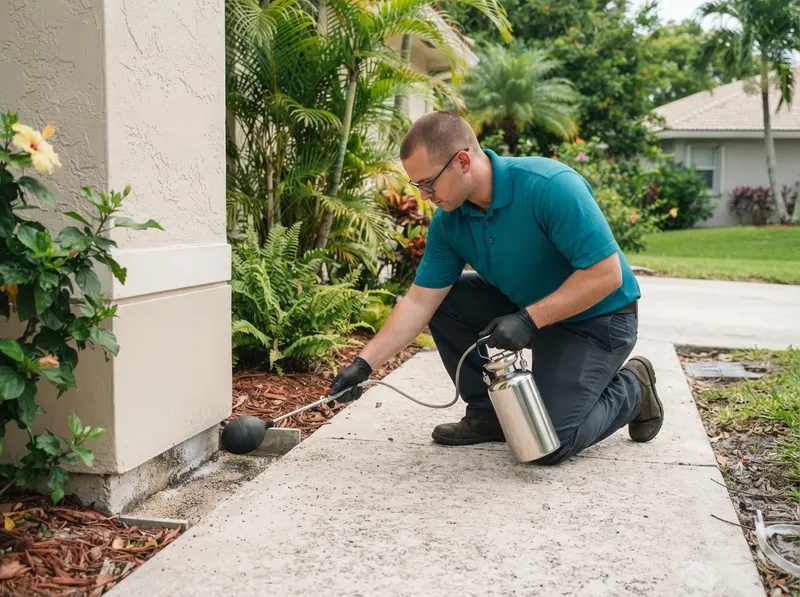
Miami-Dade County properties encounter heavy pest pressure from the American cockroach (*Periplaneta americana*), an insect measuring between 1.5 and 2.1 inches long that thrives in high humidity and temperatures above 80 degrees Fahrenheit. Rather than nesting inside interior drywall, these insects originate in decaying organic material, sewer cleanouts, and moist soil beds before seeking indoor shelter during torrential downpours. Dense sub-tropical plant canopies found along residential avenues in Coconut Grove, Silver Bluff, and Coral Way supply persistent leaf litter and shade that foster large outdoor populations. An exterior perimeter program creates a continuous barrier along the home foundation to arrest this migration at the building envelope, avoiding the placement of airborne chemical sprays inside family living spaces.
The technical application targets the lower 3 feet of the exterior structural wall and extends 5 to 10 feet outward into surrounding mulch, gravel, and lawn turf. Formulations rely on water-insoluble, microencapsulated suspension concentrates that bind to concrete, stucco, and soil particles. This bonding ensures chemical longevity through typical South Florida daily summer precipitation cycles that routinely wash away consumer-grade retail pyrethroid sprays. In high-density settings like brick-paved courtyards in Brickell or zero-lot-line townhomes in Edgewater and Wynwood, outdoor treatments prioritize weep screeds, French drains, and exterior conduit points where utility lines pierce structural masonry.
Selecting an exterior perimeter barrier over whole-house indoor fogging depends on the insect species present. If adult palmetto bugs wander inside singly near plumbing chases after storms, an exterior perimeter barrier is the appropriate intervention; it stops the outdoor harborage without leaving chemical fumes near kitchen surfaces or bedrooms. Conversely, if small 0.5-inch German cockroaches appear within kitchen cabinetry or appliances, interior cleanout baits are required instead, as that domestic species reproduces indoors and does not travel from the yard. The trade-off of a strictly exterior barrier protocol is that physical exterior access must remain unblocked by dense, unclipped foliage, and existing indoor stray specimens must be removed by hand or targeted glue boards while the perimeter barrier takes hold outside.
Every job gets a firm, written price after a free on-site visit.
Tell us about your american cockroach exterior perimeter defense job in Miami and we'll send a clear, written quote, usually the same day.
 Royal Palm Pest Control