Roof rats utilize dense subtropical tree canopies throughout Miami-Dade County to bypass ground-level defenses and access buildings directly through upper building elevations. In neighborhoods like Coconut Grove and…
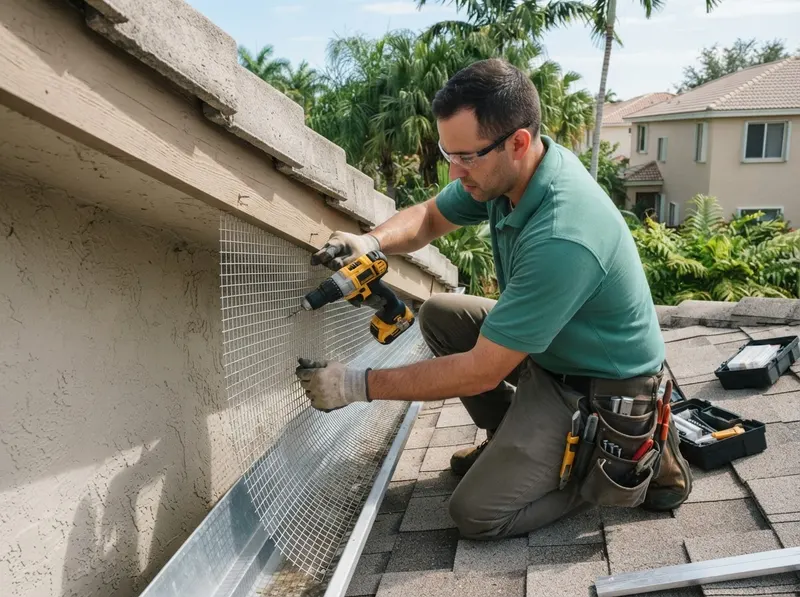
Roof rats utilize dense subtropical tree canopies throughout Miami-Dade County to bypass ground-level defenses and access buildings directly through upper building elevations. In neighborhoods like Coconut Grove and Coral Way, mature live oaks, banyans, and palms overhang architectural rooflines, providing black rats a direct path onto barrel tile, fascia boards, and air-conditioning conduit chases. Unlike standard poison bait stations, which allow rodents to consume anticoagulant bait and subsequently perish inside interior wall cavities or ceiling insulation, structural exclusion establishes a physical barrier. Exclusion relies on 1/4-inch galvanized hardware cloth, aluminum flashing, and copper wire mesh to seal openings as small as half an inch, preventing entry without generating chemical fumes or indoor decomposition odors.
Historic wood-frame homes in Silver Bluff, high-humidity crawlspaces in Little Havana, and flat-roof modern construction across Wynwood, Edgewater, and the Upper Eastside present distinct structural vulnerabilities. A property with localized pipe penetration gaps requires basic flashing collars and minor masonry sealing. Conversely, a multi-story home along Brickell or near the David T. Kennedy Park corridor featuring interlocking clay roof tiles often requires secondary eave closures and mortar repairs to stop rats from squeezing beneath bottom row contours. While exterior baiting provides temporary population suppression, physical exclusion permanently alters the building envelope to withstand intense rainstorms and recurring rodent pressure.
Every job gets a firm, written price after a free on-site visit.
Tell us about your roof rat and rodent structural exclusion job in Miami and we'll send a clear, written quote, usually the same day.
 Royal Palm Pest Control