Drywood termite spot treatment provides targeted eradication for active Cryptotermes brevis colonies without vacating the premises. In historic wood-frame vernacular structures and post-war bungalows across Silver…
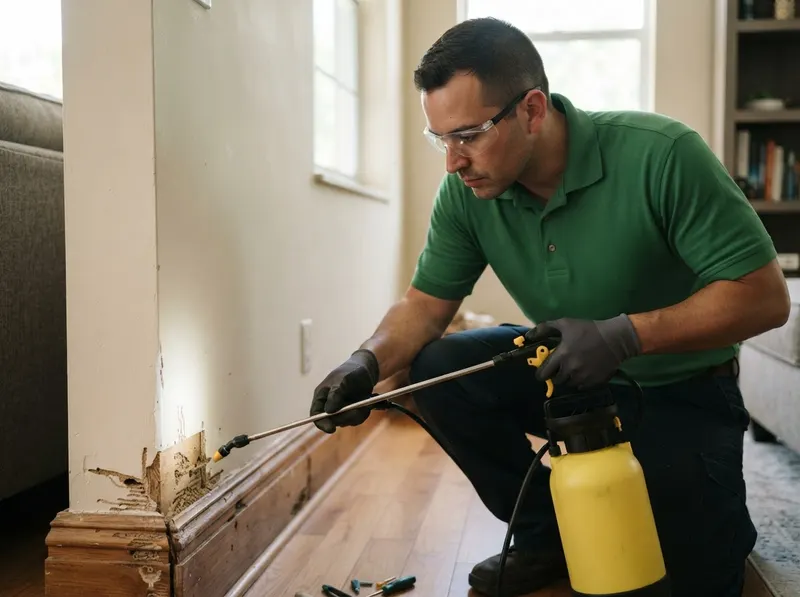
Drywood termite spot treatment provides targeted eradication for active Cryptotermes brevis colonies without vacating the premises. In historic wood-frame vernacular structures and post-war bungalows across Silver Bluff, Coconut Grove, and Little Havana, drywood termites enter structural profiles directly through attic vents, exposed fascia, and soffit edges during springtime swarming flights. Unlike subterranean termites that require soil moisture contact, drywood termites survive entirely inside sound timber with wood moisture levels below 12 percent. Spot treatment targets these self-contained galleries using specialized low-pressure injection equipment to deposit non-repellent transfer agents directly into structural galleries, preserving internal air quality and preventing family displacement.
The localized approach fits situations where fecal pellet kick-out piles are isolated to specific structural components, such as a single Dade County pine joist, an antique mahogany entrance door, or a single run of baseboard molding along Coral Way or the Upper Eastside. If structural inspection reveals drywood termite kick-out frass across three or more disconnected framing elevations or inaccessible roof truss assemblies, whole-structure containment or fumigation is typically required. The primary operational trade-off of spot intervention is targeted preservation versus systemic coverage: spot treatment minimizes chemical volumes inside living spaces and avoids utility disconnects, but requires precise pinpointing of every active gallery site.
Technicians map the extent of interior damage by tracing surface kick-out holes and acoustic resonance inside the wood members. Once the gallery boundary is identified, small access ports measuring 1/8-inch in diameter are drilled directly into the infested timber pockets. Liquid or precision expanding foam termiticides are injected under 15 to 25 PSI of pressure, coating the internal runways where worker and soldier termites travel. After the active gallery is saturated, injection holes are sealed with matching wood dowels or neutral composite compound to lock the formulation inside the timber core.
Every job gets a firm, written price after a free on-site visit.
Tell us about your drywood termite spot treatment job in Miami and we'll send a clear, written quote, usually the same day.
 Royal Palm Pest Control